Hardened steel absorbs less magnetic flux than annealed steel, and it keeps some of what it absorbs. A part ground on a magnetic chuck can leave the machine magnetised, still holding swarf and chips. A demagnetizer removes that residual field before the part moves on.
Why it happens
Annealed material takes up the maximum flux and keeps no residual magnetism once the chuck is switched off. Hardened tools, dies, bearings and ground plates behave differently: they hold on to part of the field. The harder the part and the stronger the chuck, the more likely it is to stay magnetised.
Choosing a demagnetizer
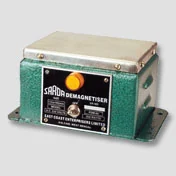
- Platen demagnetizer: a table unit for the tool room and production line. Removes magnetism from hardened tools, dies, drills, cutters, punches, ground plates and bearings.
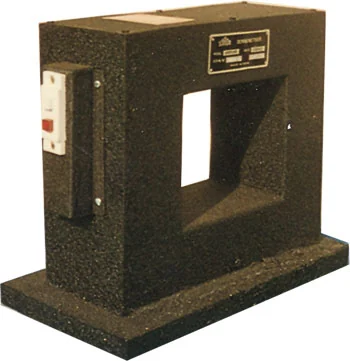
- Aperture (window) demagnetizer: parts pass through a strong AC field in the window, so it fits in line. Used at the output of high-speed grinders in bearing and roller plants, between roller tables or on a conveyor. Table-mounted and free-standing models, 440 V AC, 50 Hz, 2-phase.
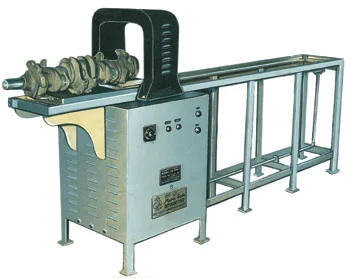
- Trolley demagnetizer: a larger aperture unit with a carriage for heavy, long parts such as engine and gearbox components and large dies. A limit switch cuts power as the part reaches the far side. Built in sizes to suit the job.
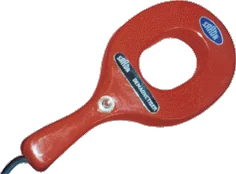
- Hand demagnetizer: hand-held and fully insulated, for local areas deep inside dies and moulds, or for drills and taps while still on the machine.
- MAG-DEMAG: a compact unit with no power supply that magnetises or demagnetises small tools, such as drills, taps and screwdrivers.
A simple routine
Demagnetise straight after grinding, before parts are measured or assembled. For batch work, an aperture unit on the output side of the grinder handles every part without an extra handling step.